


NTU actively contributes to sustainable water conservation efforts beyond campus through scientific research, technical consultation, and community engagement. Collaborating with government agencies, cultural institutions, and local communities, NTU supports projects that enhance water quality, optimize resource use, and strengthen public awareness of sustainable water management.
- Te-Chi Reservoir (德基水庫) Water Quality Monitoring
NTU collaborates with the Ministry of Economic Affairs to conduct long-term water quality investigations and algal monitoring in the Te-Chi Reservoir, a major water source in central Taiwan. This project assesses how climate change influences eutrophication and overall water quality, ensuring that the reservoir continues to meet national drinking water standards. The findings provide scientific evidence for sustainable reservoir management and guide government strategies to protect and conserve critical water resources.
- Lake Tswei (翠湖) Water Quality Improvement at the National Dr. Sun Yat-sen Memorial Hall
To promote sustainable water management and conservation in urban environments, NTU was commissioned by the National Dr. Sun Yat-sen Memorial Hall to implement the Lake Tswei Water Quality Improvement Project. As Lake Tswei is an artificial ecological lake easily affected by weather and runoff, the project applies physical and biological treatment methods to achieve long-term maintenance without draining or dredging, thus conserving water resources while restoring ecological balance.
Regular water testing (DO, pH, NH₃) ensures aquatic safety, while aeration systems, biological purifiers (magnesium hydroxide), and planted native aquatic vegetation enhance natural filtration, biodiversity, and water self-purification capacity. This approach establishes a low-maintenance, water-saving, and ecologically resilient model for sustainable urban water bodies.


- Sustainable Water Resource Management Project
Taiwan's mountainous terrain and seasonal rainfall often lead to challenges in water resource allocation. To prevent water scarcity for residents, agriculture, and industry, NTU is integrating expertise from various fields, including bioengineering, environmental engineering, urban planning, soil and water conservation, and agricultural economics, to advance the "Sustainable Water Resource Management" project.
This initiative focuses on the water resources of southern Taiwan, clarifying information on supply sources—such as surface water, groundwater, and reclaimed water—as well as identifying stakeholders on the demand side, including government, businesses, farmers, and the public. By utilizing system modeling, we aim to simulate strategies that effectively meet multiple objectives and ensure balanced management of water resources.
- Northern Taiwan River Conservation Center
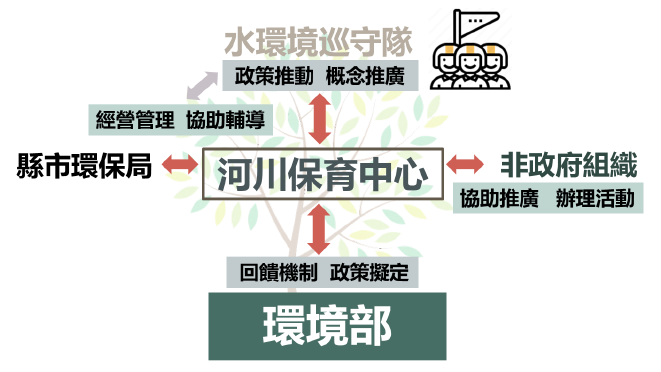
Since 2015, NTU's Northern Taiwan River Conservation Center has been at the forefront of supporting EPA and local governments in establishing water environment patrol teams to protect local rivers from pollution. The Center provides tailored training programs that address the unique needs of each patrol team in different regions and cover a variety of topics, including river conservation, water quality monitoring, wastewater management, pollution prevention, river ecological monitoring, biodiversity, stream ecological indicators, and introductions to water quality improvement projects. By empowering local communities, we aim to foster a deeper connection to their natural environment and encourage active participation in protecting water resources.


- LTSER Feitsui Station (翡翠站)
The Taipei Water Source Domain is responsible for supplying domestic water to 6.5 million residents in the capital region. This area features abundant water resources and rich natural ecosystems, and it is also a significant tea-producing region in northern Taiwan, as well as a traditional habitat for Indigenous communities. To assess the impacts of land use changes, hydrological variations, climate change, invasive species, and human activities on local water resources and ecosystems, NTU, Academia Sinica, the Taipei Water Management Branch, and the Taiwan Forestry Research Institute have collaborated to establish the Feitsui Agroforestry Long-Term Socio-Ecological Research (LTSER) Station. This station conducts regular monitoring of water quantity and quality, as well as energy and nutrient balances. In addition to ensuring that local water quality is not compromised by human activities, the collection of scientific data helps establish a solid knowledge base for environmental ecological issues and effective governance.

Collectively, these initiatives demonstrate NTU’s commitment to advancing practical, science-based solutions for sustainable water conservation beyond its campus boundaries.