


- Sustainable Food Principles
NTU includes sustainable dining as one of the evaluation criteria in its annual campus restaurant assessment. In alignment with the UN Sustainable Development Goals (SDGs), NTU follows five key principles:
-
Eco-Friendly Farming: Use of ingredients certified under domestic or international organic and eco-friendly farming standards.
-
Minimal Additives: Adoption of "Clean Label" standards to reduce food additives and upstream carbon emissions.
-
Low-Carbon Vegetarian Options: Promotion of vegetarian meals that exclude meat, eggs, and seafood to reduce greenhouse gas emissions.
-
Local Production: Prioritizing locally sourced ingredients to reduce food miles and support local agriculture.
-
Resource Circulation: Encouraging whole-food utilization, low-carbon packaging, and circular economy practices.

-
- Incentive Measures for Sustainable Dining
NTU encourages campus food vendors to use environmentally friendly and animal welfare–certified ingredients. The use of certified ingredients is included as one of the selection criteria for contracted vendors to strengthen food traceability and sourcing transparency. Certified ingredients include organic, traceable, halal, and animal welfare–labeled products, as well as imperfect produce and surplus food.
Each year, NTU recognizes the top three restaurants with the "Most Sustainable Dining Concept" award through an online campus survey. In 2024, the awardees were Vegetarian Meal (食香園), Yu-Xi Buffet (御喜自助餐), and Delicious Buffet (美味自助餐). Vendor information and certification details are published on the Dining Services Committee website.

- Certified Ingredients
NTU promotes the use of certified agricultural products—such as CAS, organic, animal welfare, halal, and traceable certifications—and integrates these standards into the university's contractor selection process to ensure transparency and accountability in sourcing.

- NTU's First Green Dining Store: A Collaboration for Sustainable Food
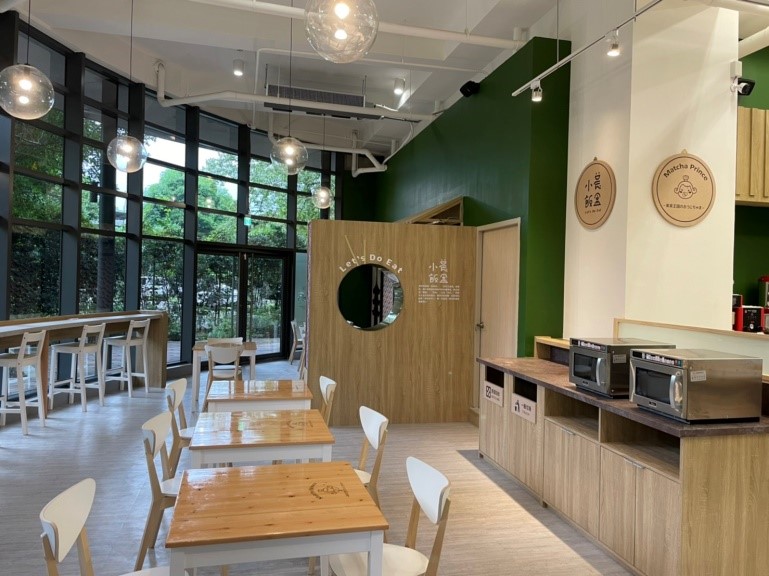
Originating from National Taiwan University (NTU), "Small Farmers Lunch Box" has joined forces with "Macha Prince x Let's Do Eat," which focuses on local sustainability, and the "Carrefour Cultural and Educational Foundation." In 2022, they opened a co-branded physical store on campus—NTU's first green dining establishment. Beyond selling "Small Farmers Lunch Boxes," the store carries a diverse range of products from "Macha Prince" and the "Carrefour Cultural and Educational Foundation" that support animal welfare, small farmer contracts, social enterprises, and fair trade initiatives. Every product in the store—whether beverages and meals from "Macha Prince" or "Small Farmers Lunch Boxes"—uses ingredients with production and sales traceability certification. Dairy and egg products are specially selected to meet animal welfare standards, including fresh milk and cage-free eggs that are audited and verified by the Taiwan Society for the Promotion of Animal Welfare (TSPAW) and comply with animal welfare labeling requirements. This initiative not only promotes healthy eating but also benefits the land and animals. It represents concrete action supporting the vision of food transformation and sustainability, enabling consumers to participate in this social movement through their dietary consumption choices.

- NTU Farm-Fresh Eggs and Milk
NTU Farm produces fresh milk, eggs, vegetables, and bakery products delivered daily to on-campus stores. These local products are available at affordable prices to students and staff. The on-campus restaurant Macha Prince x Let's Do Eat (茶茶小王子) uses NTU's farm milk to create desserts such as Uji Matcha & Coconut Milk Snow Cake and Milk Mousse Cake.


All NTU farm eggs are produced under animal welfare standards and are Salmonella-free, verified through regular testing by NTU’s Zoonoses Research Center and the National Animal Industry Foundation.

- Say No to Shark Fins
To support marine biodiversity and conservation, NTU prohibits the serving of dishes made from whale sharks or shark fins at all university- or college-organized events and banquets.

- Carbon-Neutral Dining and Local Ingredients
Through the Carbon-Neutral Healthy Dining Campus Program (碳中和健康飲食校園計畫), NTU calculates and labels the carbon emissions of meals served in student cafeterias as low, medium, or high, allowing diners to make informed, low-carbon choices. Most campus restaurants use locally sourced ingredients, with only a portion of beef and pork being imported, significantly reducing NTU's overall food-related carbon footprint.

- Vegetarian and Vegan Options
NTU's campus features several vegetarian restaurants, including Vegetarian Meal (食香園), Green Life Restaurant (小蔬杭), and Macha Prince x Let's Do Eat (茶茶小王子). Surveys indicate that approximately 50% of all meals offered on campus are vegetarian, ensuring accessible and sustainable meal options for all members of the university community.


9. Related regulation