

NTU Plant Doctors: Providing Access to Food Security Knowledge and Sustainable Technology (Partially Free)
This initiative by NTU Plant Medicine Teaching Hospital directly addresses the need to provide access to food security and sustainable agriculture and aquaculture knowledge, skills, and technology to local farmers and food producers.
NTU has established a robust, localized system in Yunlin County — Taiwan's leading agricultural region — to systematically transfer expert knowledge and technology to the community. Through the Agricultural Incubation and Extension Center, which integrates expertise from the College of Bioresources and Agriculture and the Plant Medicine Teaching Hospital, NTU has built a formal mechanism for structured knowledge transfer. NTU Plant Doctors are stationed across 13 townships in Yunlin, where they receive referrals and conduct proactive, continuous on-site field management. In 2025, field diagnostic services provided to local farmers and food producers in Yunlin County exceeded 300 cases. Their work demonstrates accessible and sustained delivery of professional agricultural knowledge and skills that bridge the gap between academia and rural practice. Covering the entire food production lifecycle — from soil preparation, seeding, and fertilization to prescription writing, pesticide timing, and harvest supervision — these experts ensure that comprehensive agricultural skills and technology are effectively shared with local farmers, strengthening food security at the community level.
The initiative also plays a vital role in advancing sustainable agriculture and improving food safety. It directly addresses the traditional over-reliance on anecdotal farming experience, which often led to the misuse of pesticides. Acting as essential intermediaries in the Ministry of Agriculture's real-name pesticide purchase system, NTU's Plant Doctors promote precision pesticide use — a core sustainable agriculture technology that minimizes environmental impact, reduces production costs by lowering waste, and enhances food safety through accurate chemical application and timing. By equipping local farmers and food producers with this practical knowledge and technology, this shift toward knowledge-based, precise farming contributes directly to long-term food security, agricultural resilience, and sustainable development.

▲ Professor Ting-Hsuan Hung (second from left) and Associate Professor Hao-Xun Chang (first from right) from the Department of Plant Pathology and Microbiology conducting a field inspection. In May 2025, the Plant Doctor team partnered with the Shuilin Township Office to hold a workshop on integrated health management consultation for edamame cultivation. In addition to the indoor lecture sessions (covering an introduction to edamame varieties and cultivation management techniques, as well as the identification and control of key pests and diseases), the team also provided on-site management consultation in the field.
Workshop on Management of a Major Litchi Pest (Litchi Leafminer) (Free)
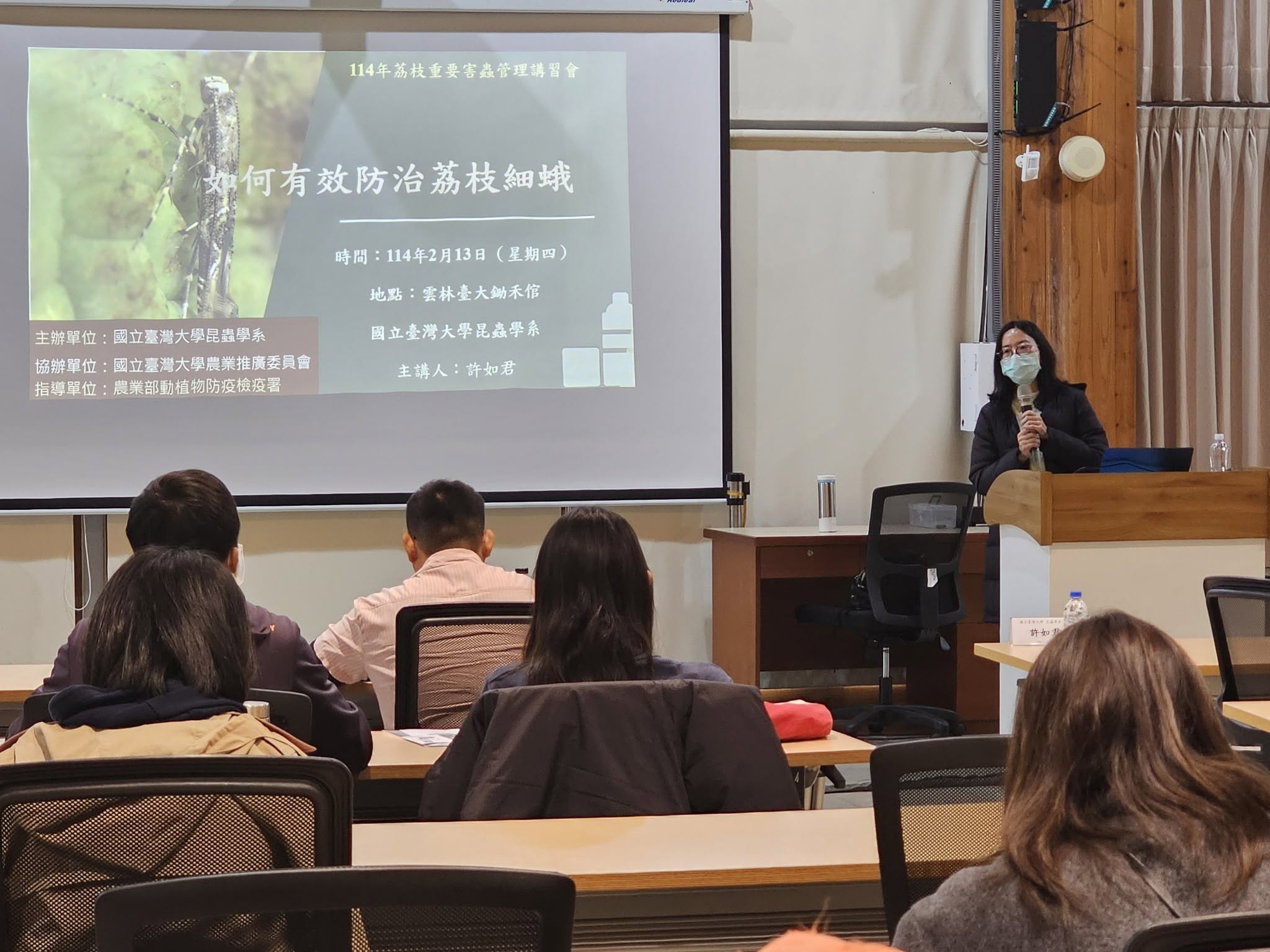
The litchi leafminer (Conopomorpha sinensis) has long posed a significant challenge to Taiwan's litchi and longan industries. To help growers address this threat, the Department of Entomology at NTU organizes a free workshop on "Management of a Major Litchi Pest (Leafminer)" annually, providing local farmers and food producers with direct access to specialized knowledge and skills in sustainable agriculture.
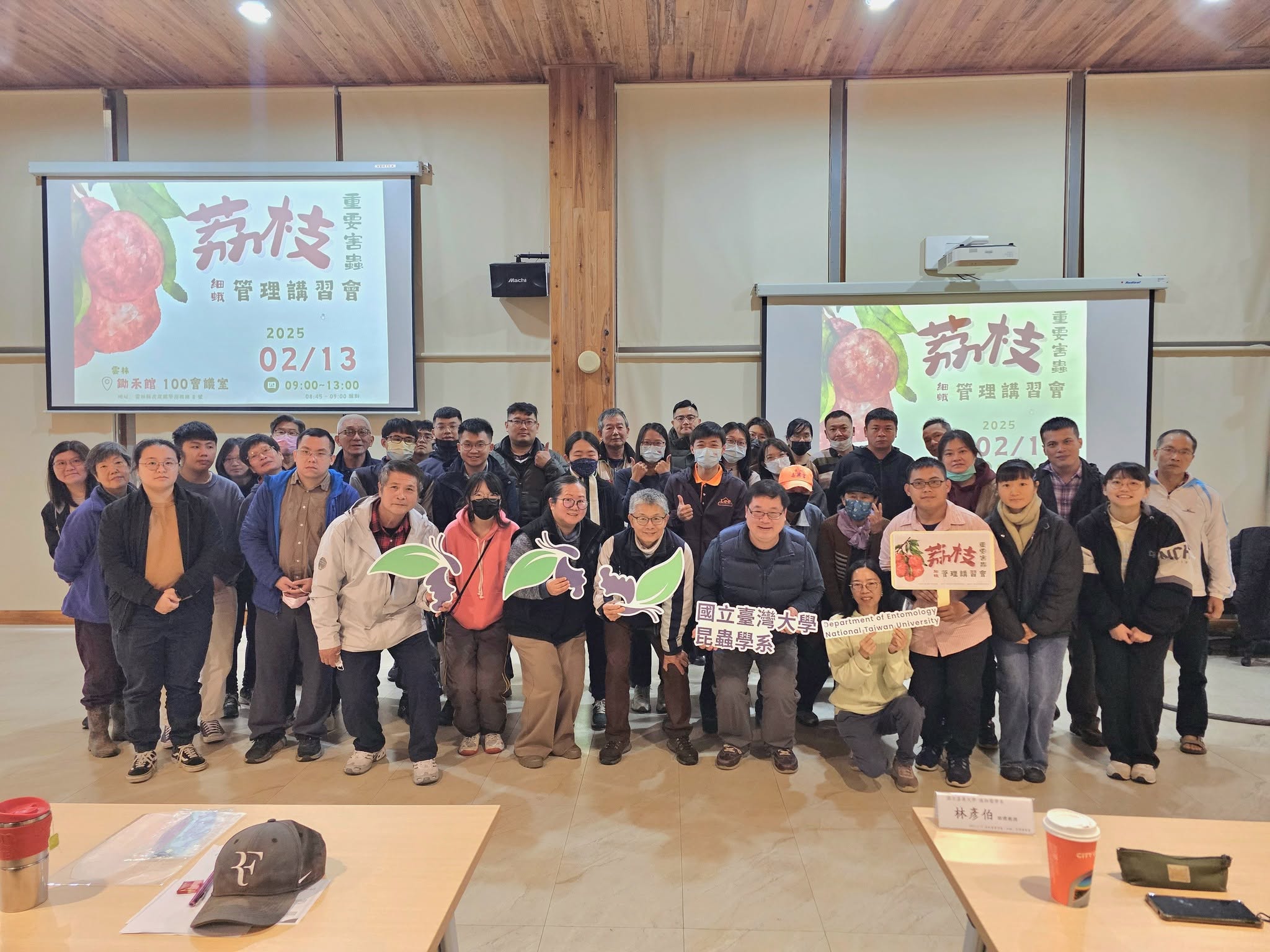
The workshop, held on February 13, 2025, brought together leading experts to share their knowledge and practical experience: Associate Researcher Ming-Yi Chou (National Chung Hsing University), Assistant Professor Yen-Po Lin (National Chiayi University), young farmer Po-Cheng Huang (Dashu District, Kaohsiung), and Professor Ju-Chun Hsu (Department of Entomology, NTU). Together, they offered an in-depth analysis of the ecology and outbreak mechanisms of the litchi leafminer, sex pheromone trapping and monitoring technology, light-based control trials, and integrated management strategies for fruit flies — practical, science-based technology aimed at reducing pesticide reliance and supporting sustainable pest management.
Beyond academic presentations, the workshop featured hands-on discussions and sharing of field applications, giving farmers and specialists an active platform to exchange knowledge and skills. The lively interaction between attending farmers and experts made the session a valuable knowledge-sharing opportunity, generating new possibilities for future pest management strategies and reinforcing local farmers' access to the sustainable agricultural knowledge and technology needed to safeguard crop production and food security.